Loyalty Program Implementation Checklist: Data, Rewards, Launch Plan, and QA
Updated on:

Key findings
A loyalty program implementation should start with the behavior the brand wants to change, not with points, tiers, or software settings.
Clean customer identity, transaction data, consent, reward rules, and integration ownership are the foundation of a usable program.
The launch plan should include reward economics, fraud controls, staff workflows, lifecycle campaigns, reporting, and rollback criteria.
Loyalty platform implementation is faster when teams separate launch-critical requirements from phase-two ideas.
QA should test balances, reversals, returns, duplicate profiles, tier progress, offer eligibility, messaging consent, and analytics events before go-live.
CXForge-style implementation connects loyalty mechanics with customer data, segmentation, campaigns, analytics, and post-launch optimization.
A loyalty program can look simple from the outside: customers join, earn points, unlock rewards, and come back more often.
Implementation is where the real work appears. The brand needs reliable customer records, clear reward rules, POS or ecommerce events, consent, staff workflows, fraud controls, campaign triggers, analytics, support processes, and finance visibility. If those pieces are not planned before launch, the program may enroll members but still fail to change retention.
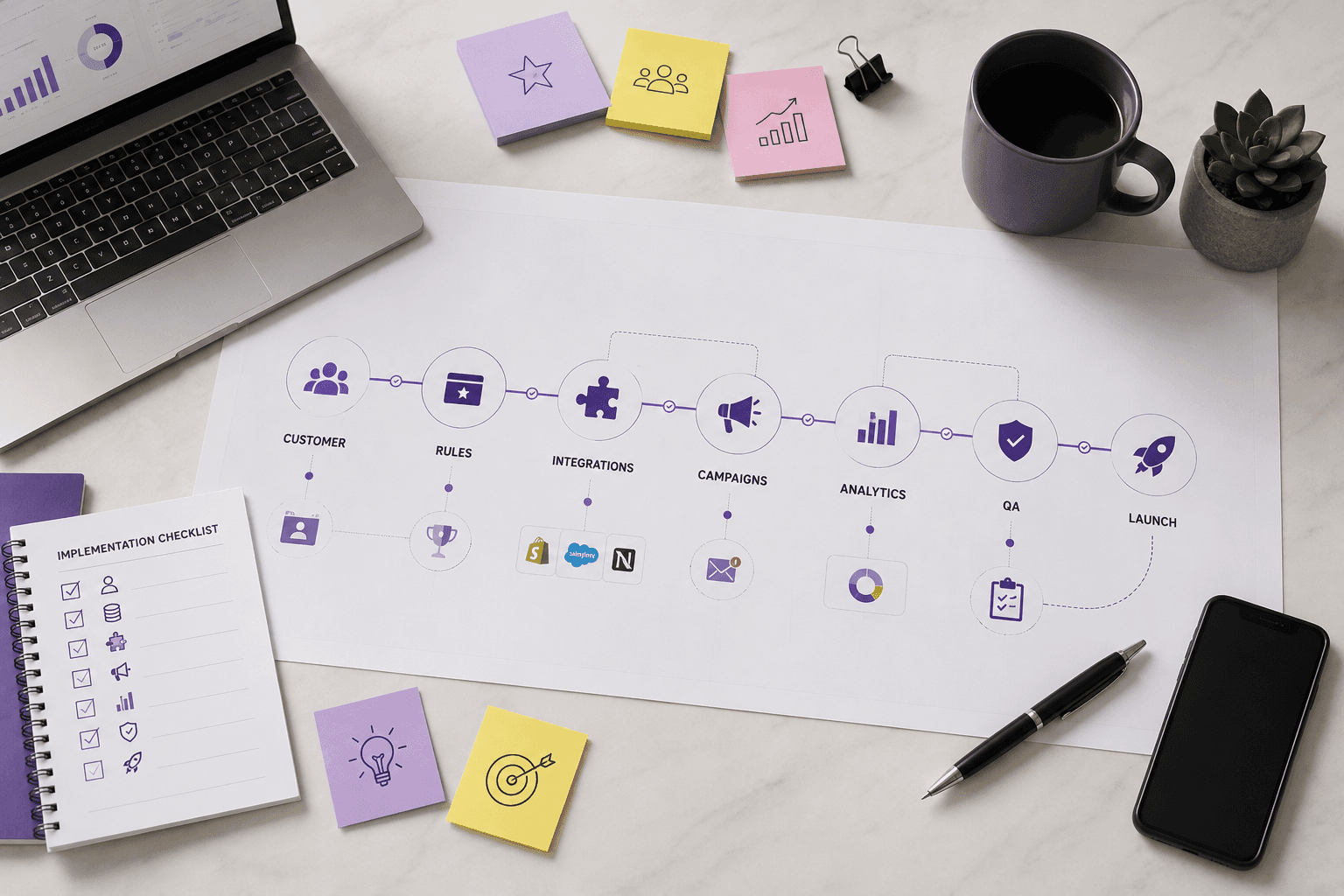
This loyalty program implementation checklist is built for CRM, loyalty, retail, hospitality, F&B, ecommerce, and DTC teams preparing to launch or rebuild a program. Use it before choosing a vendor, during onboarding, and again before go-live.
What is loyalty program implementation?
Loyalty program implementation is the process of turning a loyalty strategy into a working customer experience.
It includes the commercial design of the program, the customer data model, the reward rules, the technology configuration, the channel integrations, the launch campaigns, the operational workflows, the measurement model, and the QA process before customers start using it.
In practical terms, implementation answers questions like:
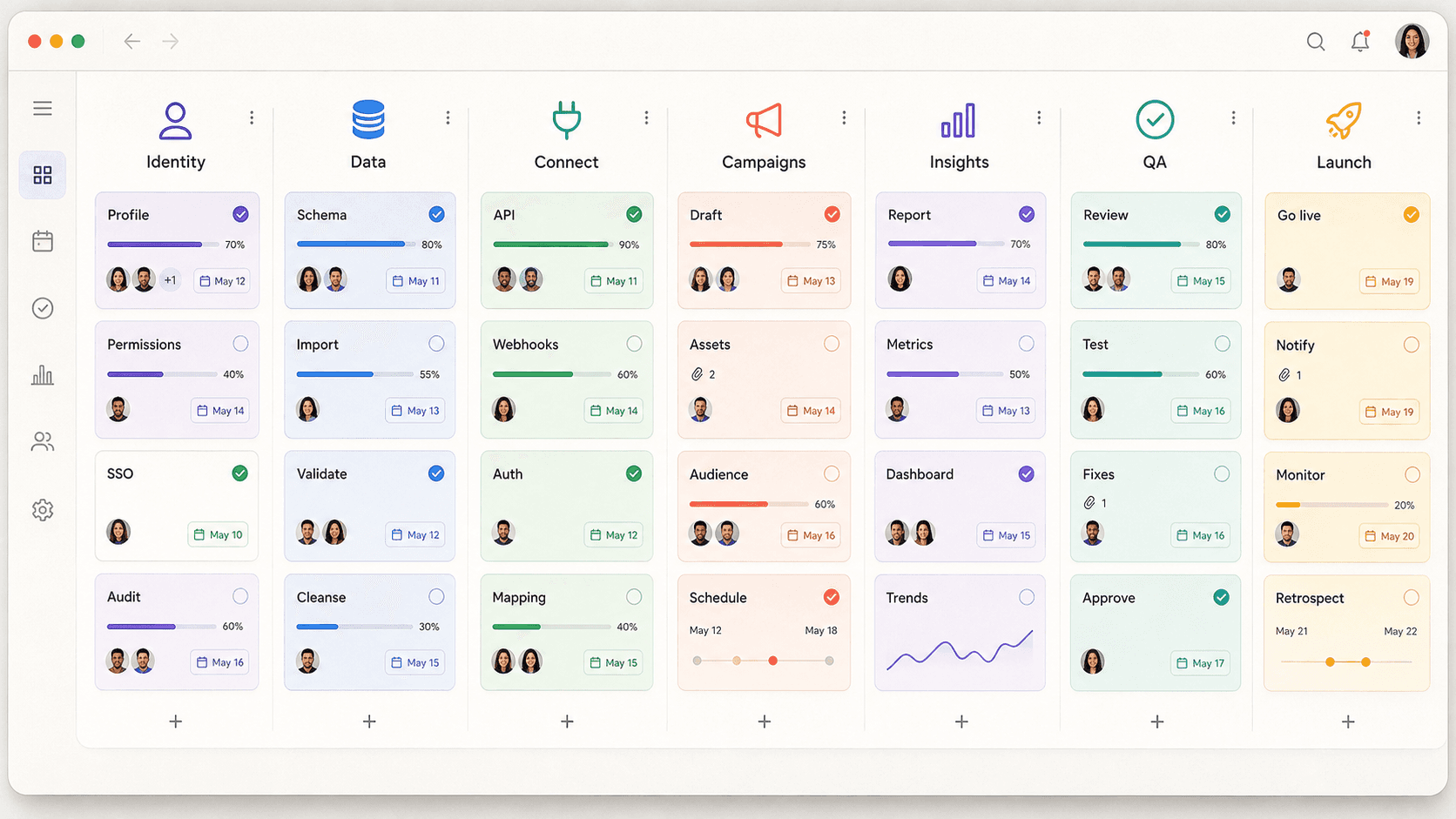
Who can join?
What customer identity will the program use?
Which purchases earn value?
What happens when orders are returned or canceled?
How are points, tiers, rewards, referrals, wallets, or partner benefits calculated?
Which systems send and receive data?
Which campaigns are triggered at launch?
What should support teams do when balances look wrong?
How will the business know whether the program is working?
A loyalty platform can provide the engine. Implementation decides whether that engine fits the business.
Start with the loyalty goal, not the mechanic
Before creating a points table or tier ladder, write down the customer behavior the program is meant to change.
Goal | What the program should influence | Example loyalty motion |
|---|---|---|
Increase second purchase | New customers return after first order | Welcome journey, first reward, category recommendation |
Improve visit frequency | Existing customers buy or visit more often | Points progress, visit challenges, expiring rewards |
Grow average order value | Members add more value per purchase | Tier threshold, bundle reward, category bonus |
Reduce churn | At-risk customers return before lapsing | Win-back trigger, personalized recovery offer |
Shift to direct channel | Customers use app, ecommerce, or owned channels | Wallet pass, app-exclusive reward, direct-channel bonus |
Strengthen VIP retention | Best customers feel recognized | Tier benefits, access, service, early drops |
Improve data capture | More customers identify and consent | Simple enrollment, preference capture, receipt linking |
This matters because different goals require different implementation choices. A program built to drive store visit frequency needs different events, reports, and staff workflows than a DTC replenishment program or a hotel partner benefits program.
The loyalty program implementation checklist
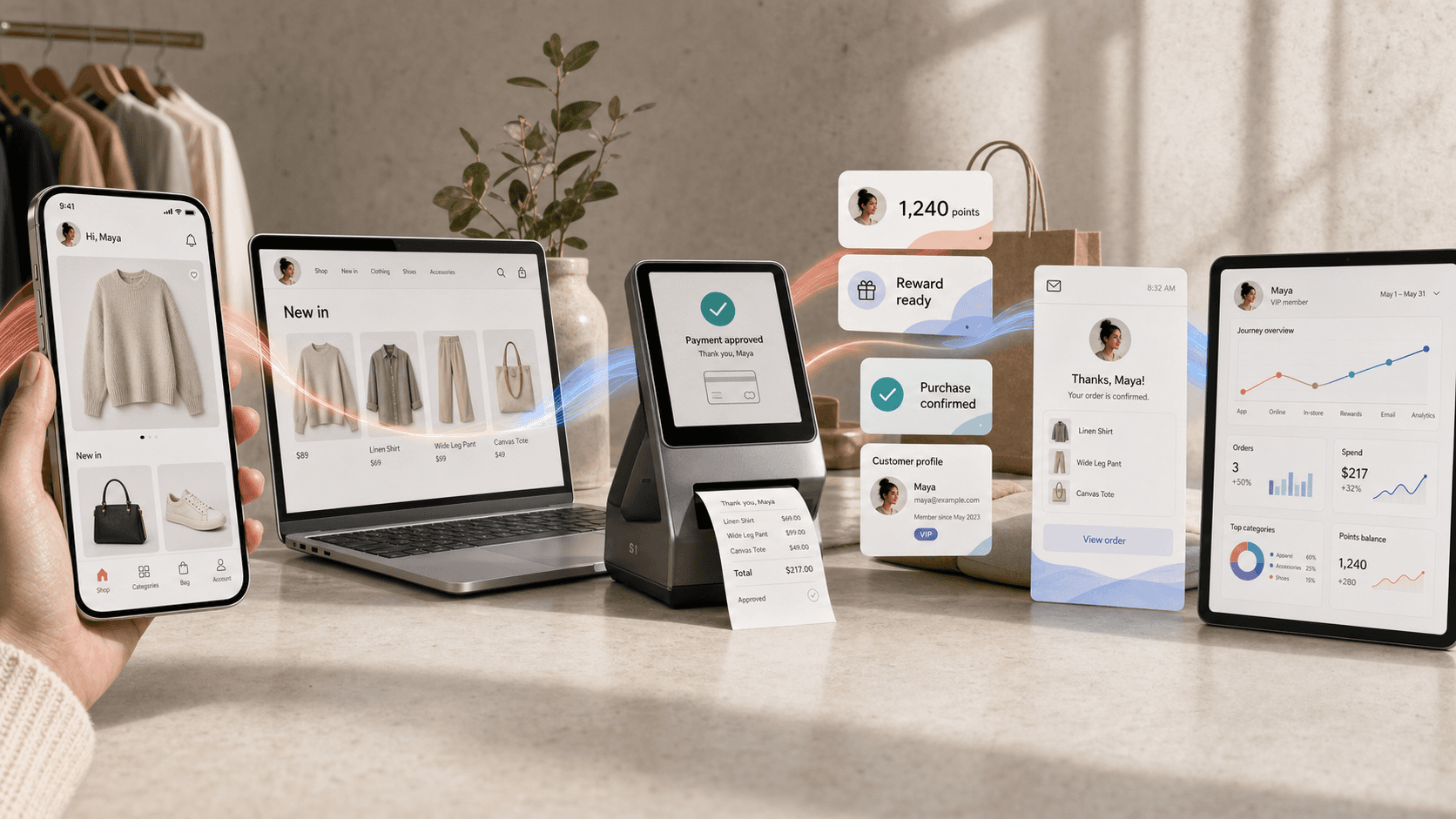
Use the following checklist as the working scope for launch.
1. Define the launch scope
Start by separating what must be live on day one from what can wait.
Launch-critical decisions:
Target customer segments.
Markets, stores, channels, and brands included at launch.
Enrollment method: POS, ecommerce, app, QR code, wallet pass, staff-assisted, or imported members.
Loyalty mechanics: points, tiers, cashback, stamps, wallet credits, referrals, challenges, paid membership, or partner rewards.
Reward funding model.
Campaign channels: email, SMS, WhatsApp, app push, in-app, onsite, POS receipt, or staff script.
Reporting owner and launch KPIs.
Customer support process.
Phase-two ideas may include advanced AI personalization, coalition partners, gamification, complex tier benefits, custom mobile app features, and deep BI dashboards. These can be valuable, but they should not delay a clean first launch unless they are core to the business case.
2. Map customer identity
Loyalty programs depend on knowing who the customer is across transactions and channels.
Minimum identity decisions:
Primary member identifier: phone, email, app ID, wallet ID, customer ID, or membership number.
Secondary identifiers: POS customer ID, ecommerce customer ID, receipt ID, payment token, device ID, or app user ID.
Merge rules for duplicate profiles.
Household, family, or business-account linking rules if applicable.
Consent and marketing permissions.
Staff process for looking up members in store.
Support process for correcting identity issues.
Do not treat identity as a technical detail. If member profiles split across POS and ecommerce, rewards will look broken even when the loyalty rules are correct.
3. Audit the customer and transaction data
Before importing customers or launching events, check whether the data is usable.
Review:
Customer records: names, phones, emails, IDs, status, opt-ins, language, market, and duplicate rate.
Transaction history: order IDs, dates, channels, stores, products, quantities, prices, taxes, discounts, returns, and cancellations.
Product or category data: SKUs, product groups, margin bands, excluded items, and gift cards.
Existing balances or tiers if migrating.
Consent fields and source of consent.
Event timestamps and timezone handling.
Test records and internal staff accounts that should be excluded.
For CXForge buyers, this is where loyalty and CDP work overlap. The program needs activation-ready profiles, not just a spreadsheet of customers. The CDP Institute describes a customer data platform as packaged software that creates a persistent, unified customer database accessible to other systems; loyalty teams need the same practical outcome even when they are not buying a standalone enterprise CDP.
4. Design reward rules and economics
Reward rules should be easy for customers to understand and precise enough for operations, finance, and support.
Define:
Earning rate by channel, product, category, market, or customer tier.
Redemption rules and thresholds.
Excluded items, taxes, delivery fees, gift cards, and discounts.
Points expiry policy.
Return, exchange, cancellation, and partial refund handling.
Manual adjustment permissions.
Tier qualification and downgrade rules.
Reward liability and expected breakage assumptions.
Partner-funded versus brand-funded rewards.
Fraud and abuse rules.
The mistake is launching with generous rules that nobody has modeled. A reward can feel small to a customer but become expensive at scale if it applies to discounted products, low-margin categories, and repeat redemptions without controls.
5. Confirm platform and integration requirements
Loyalty software implementation usually touches more systems than the first vendor call suggests.
List every system that needs to send or receive loyalty data:
POS.
Ecommerce platform.
Mobile app.
CRM or CDP.
Email, SMS, WhatsApp, or push platform.
ERP, finance, or order management.
Customer support/helpdesk.
Payment or wallet provider.
Data warehouse or BI tool.
Partner systems if the program includes earn, burn, or shared benefits.
For each integration, define the event owner, data direction, expected latency, failure handling, and QA owner.
Integration | Sends | Receives | Launch-critical tests |
|---|---|---|---|
POS | Purchases, returns, member lookup | Balance, eligibility, member status | Earn, redeem, refund, offline sync |
Ecommerce | Orders, cancellations, customer updates | Rewards, tier status, offers | Checkout redemption, duplicate account, return reversal |
Messaging | Campaign sends and engagement | Segments, triggers, preferences | Consent, suppression, personalization fields |
Support | Tickets and adjustments | Profile, balance, order history | Manual credit, disputed balance, merge request |
6. Build the member experience
Implementation should cover the full customer journey, not only the backend.
Map:
Enrollment page or staff-assisted signup.
Welcome message.
Member profile or wallet view.
Earn confirmation.
Balance display.
Reward discovery.
Redemption flow.
Tier progress.
Expiry reminders.
Referral or challenge experience if included.
Help content and support path.
Keep the first experience simple. Customers should understand how to join, what they get, how to earn, and how to use rewards within the first interaction.
7. Prepare launch campaigns and lifecycle triggers
A loyalty program needs activation from day one.
Core launch campaigns:
Existing customer invitation.
New member welcome.
First earn confirmation.
First reward education.
Points or tier progress reminder.
Reward available reminder.
Lapsing member win-back.
VIP recognition.
Birthday or anniversary journey if relevant.
Staff-assisted enrollment prompt for store teams.
Do not send everyone the same offer forever. Connect campaigns to customer segmentation so the program changes behavior by lifecycle stage, purchase history, channel preference, and value.
8. Set the measurement model before go-live
Reporting should be defined before the first launch campaign.
Track:
Enrollment rate.
Active member rate.
Member purchase frequency.
Second purchase rate.
Repeat purchase rate.
Redemption rate.
Reward cost.
Points liability.
Tier movement.
Campaign engagement.
Incremental margin after rewards.
Support tickets related to loyalty.
Fraud or abuse events.
Opt-in and opt-out rates.
The most useful measurement model separates diagnostic metrics from business outcomes. Enrollment, points issued, and email clicks explain activity. Repeat purchase, frequency, margin after rewards, retention, and customer lifetime value explain whether loyalty is working.
9. Train staff and support teams
Store teams, call centers, and support teams often decide whether a loyalty launch feels smooth.
Prepare:
A one-page program explanation.
Member lookup steps.
Enrollment script.
Redemption process.
Return and cancellation rules.
Manual adjustment policy.
Escalation path.
Known launch edge cases.
Support macros for common questions.
Staff test accounts.
If the program runs across stores, restaurants, hotels, or franchise locations, train managers first and require launch-day feedback. A technically correct program can still fail if staff cannot explain it.
10. Run pre-launch QA
QA should test customer-facing journeys, system events, finance rules, and support workflows.
Test these scenarios before go-live:
New member signup.
Existing customer login.
Duplicate profile creation.
Member lookup at POS.
Online order earning.
Store purchase earning.
Reward redemption.
Partial redemption.
Return reversal.
Canceled order reversal.
Tier upgrade.
Tier downgrade if applicable.
Points expiry.
Manual adjustment.
Marketing opt-in and opt-out.
Suppressed customer campaign exclusion.
Fraud rule trigger.
Analytics event tracking.
Support ticket creation.
Document pass, fail, owner, fix, and retest status. Do not rely on a single happy-path checkout test.
11. Plan rollback and exception handling
Every launch should have a practical rollback plan.
Define:
Who can pause earning or redemption.
Which campaigns can be stopped quickly.
How failed transactions are reconciled.
How member complaints are handled.
How staff report issues.
How finance reviews reward adjustments.
What qualifies as a launch blocker.
What qualifies as acceptable post-launch cleanup.
This protects trust. Customers are forgiving when a brand resolves problems quickly and transparently. They are less forgiving when balances change without explanation.
12. Run a phased launch
Most teams should avoid a full public launch before internal and limited external testing.
Suggested sequence:
Internal test accounts.
Staff pilot.
One store, one region, one ecommerce segment, or one customer cohort.
Soft launch to existing high-fit customers.
Full launch.
Post-launch optimization sprint.
The goal is not to delay launch. The goal is to find the issues while the audience is still small enough to fix them cleanly.
A 30/60/90-day loyalty implementation plan
Use this as a practical timeline.
Phase | Focus | Outputs |
|---|---|---|
Days 1-30 | Strategy, requirements, data audit, reward design | Launch scope, data map, reward rules, KPI model, integration plan |
Days 31-60 | Configuration, integrations, campaigns, staff workflows | Platform setup, test data, journeys, support playbook, staff training |
Days 61-90 | QA, pilot, launch, optimization | QA log, pilot learnings, full launch, first performance review |
Smaller programs can move faster. Complex programs with POS, ecommerce, app, existing balances, partner rules, multiple brands, or regional compliance needs should plan more time.
Common implementation mistakes
Launching with unclear ownership
Loyalty touches marketing, ecommerce, stores, IT, finance, legal, and support. Assign one launch owner and one owner for each workstream.
Treating migration as a simple import
If the brand already has members, balances, rewards, tiers, or historical transactions, migration needs reconciliation and member communication. Do not import balances without a validation process.
Overbuilding the first version
Too many mechanics create operational risk. It is usually better to launch a clear points or tier program with strong lifecycle campaigns than a complex program customers and staff cannot explain.
Ignoring returns and reversals
Returns, partial refunds, exchanges, canceled orders, fraud, and manual adjustments are where loyalty rules become fragile. Test them before launch.
Measuring only member revenue
Members often spend more because better customers join. Measure incremental behavior, reward cost, margin, and retention before claiming ROI.
Forgetting the support experience
Customers will ask why points are missing, why rewards expired, why a redemption failed, or why two accounts exist. Support teams need the tools and rules to answer quickly.
What to ask a loyalty platform vendor before implementation
Use these questions during vendor evaluation or onboarding:
Which integrations are native, and which require custom work?
How does the platform handle returns, reversals, and canceled orders?
Can customer identity merge across POS, ecommerce, app, and support?
How are consent, suppression, and marketing preferences managed?
Can reward rules vary by segment, tier, channel, product, or market?
How are points liability, reward cost, and redemption reported?
What fraud controls are available at launch?
What data can be exported to BI, CRM, CDP, or warehouse tools?
What implementation support is included?
What does QA look like before go-live?
What happens when an integration fails?
How quickly can the program add campaigns, segments, or partner rules after launch?
How CXForge fits the implementation work
CXForge is best positioned when the loyalty program needs more than a points widget. The implementation value comes from connecting loyalty with customer data, segmentation, activation, analytics, and practical launch support.
That means a CXForge-style implementation should help teams:
unify customer profiles across key touchpoints
configure loyalty mechanics around real retention goals
segment customers for lifecycle journeys
activate campaigns through relevant channels
track reward cost, member behavior, and retention signals
support migration and launch QA
improve the program after launch instead of treating go-live as the finish line
The core idea is simple: loyalty software should not just issue rewards. It should help the business understand and influence customer behavior.
FAQ
What is the first step in implementing a loyalty program?
The first step is defining the customer behavior the program should change, such as second purchase, visit frequency, direct-channel adoption, VIP retention, or churn reduction. Reward rules and software settings should follow that goal.
How long does loyalty program implementation take?
Simple ecommerce or single-channel programs can launch faster than complex omnichannel programs. A practical 30/60/90-day plan covers strategy and data audit, configuration and integrations, then QA, pilot, and launch.
What data is needed for loyalty software implementation?
At minimum, teams need customer identifiers, consent fields, transaction history, product or category data, order status, return and cancellation events, reward balances if migrating, and channel-specific IDs for POS, ecommerce, app, and support.
What should be tested before launching a loyalty program?
Test enrollment, member lookup, earning, redemption, returns, cancellations, duplicate accounts, tier changes, points expiry, manual adjustments, campaign consent, fraud rules, analytics events, and support workflows.
Who should own loyalty program implementation?
One business owner should lead the launch, usually CRM, loyalty, retention, ecommerce, or growth. Workstream owners should cover data, integrations, rewards, campaigns, finance, support, legal/compliance, and store or operations training.
Do I need a CDP to implement a loyalty program?
Not always. A simple program can run without a full CDP, but loyalty teams need a reliable customer data layer. If the program depends on segmentation, personalization, omnichannel recognition, partner rules, or lifecycle campaigns, CDP-like profile and activation capabilities become much more important.
Planning a loyalty launch or rebuilding an existing program? CXForge can help map your customer data, reward rules, integrations, campaigns, analytics, and launch QA into a practical implementation plan.
Book a Demo with us